PDRN Serum vs Retinol: What the Topical Evidence Actually Compares
One small eye-cream trial put PDRN ahead of retinol. It tested one formula, for four weeks, around the eyes. Your serum was not in it.
I own three PDRN products. I bought the first because the internet said “salmon sperm facial” and I needed to know. I bought the second because it was pink. I bought the third because it said PDRN and retinol, and I assumed that settled the argument. It did not. It just meant I had paid to have the argument on my face.
So here is the honest version. PDRN, short for polydeoxyribonucleotide, is a mix of DNA fragments, traditionally from salmon. It made its name in injections and wound care, and K-beauty has put it in everything from toner pads to lip balm. Retinol is the vitamin A ingredient with decades of topical data behind it. They are now sold as rivals, mostly on the strength of one small trial. This comparison is based on published research, labeling rules and each named product’s ingredient list, not on product testing, and it does not rank the products it names.
| If you want… | Lean toward |
|---|---|
| The wrinkle ingredient with the deepest topical evidence | Retinol (or another retinoid) |
| A hydrating serum with a trendy, early-stage ingredient | A PDRN serum, priced as a hydrating serum |
| Something for nights your skin won’t take retinol | A PDRN or other hydrating serum on rest nights |
| Proof that PDRN beats retinol | Nobody can sell you that yet |
Where PDRN comes from
PDRN started life as a registered drug, not a serum. A review of its pharmacology describes it as DNA purified from salmon trout or chum salmon sperm, with fragments ranging from 50 to 1,500 kDa, used for tissue repair and studied in conditions like diabetic foot ulcers [3]. Its proposed main mechanism, switching on adenosine A2A receptors, appears to depend on the DNA’s origin, molecular weight and manufacturing process [3]. Hold on to that last part. It means “PDRN” on a label is not one fixed thing, and a result from one preparation does not automatically belong to another.
The clinic version is injected, which skips the problem every serum has: getting a large molecule past the outer layer of skin. The K-beauty version is a leave-on product with “Sodium DNA” somewhere on the list, or, as we’ll see, sometimes not on the list at all.
What the research shows, and what it does not
- The headline trial was an eye cream, not a serum. A 2026 study in PLOS One gave 31 Chinese women aged 35 to 55, all with self-reported sensitive skin, a 0.1% PDRN eye cream on one side of the face and an identical-base 0.1% retinol eye cream on the other, twice daily for 28 days [1]. The PDRN side showed roughly two-fold greater improvement in under-eye wrinkles, dermal thickness, density and eye-bag measures. Both sides were well tolerated [1].
- It tested one specific preparation. The PDRN was a defined medium-length version called PDRN-850K, the only active in its formula [1]. Given that PDRN’s activity seems to depend on molecular weight and manufacturing [3], this result belongs to that material in that cream. It is not evidence for the PDRN in a different bottle.
- Four weeks is short for retinol. Retinol is known as a slow ingredient, and the paper’s own discussion cites retinoid changes measured over 24 weeks or longer [1]. A 28-day race against retinol is a race retinol was never built to win early. That doesn’t make the PDRN result wrong. It makes it an early-signal result.
- Read the author list. Three of the five authors list affiliations with Shanghai biotechnology companies, and the PDRN material was supplied by a biotechnology company. The authors declared no conflicts and no specific funding [1]. That isn’t a scandal; industry runs a lot of cosmetic research. It is a reason to want an independent repeat before anyone calls this settled.
- The wider evidence base is small and mostly not topical. A 2026 systematic review found just seven randomized PN and PDRN trials, 183 participants in total, across rejuvenation, scar prevention and wound healing [2]. The rejuvenation trials included injections, needle-free jet delivery and PN applied after microneedling. The clearest benefit was in wound healing. The authors flagged small samples, mixed routes and protocols, and no standardized PN or PDRN preparation [2].
- Retinol’s file is thicker. A study comparing retinol with prescription retinoic acid found four weeks of retinol thickened the epidermis and raised collagen production in biopsies, and 12 weeks of a retinol formula significantly reduced facial wrinkles on image analysis [4]. A review of retinoids in skin aging covers decades of such work, along with the catch: irritation such as burning and scaling puts people off, though retinol is considerably gentler than tretinoin [5].
An eye cream, used around the eyes
A face serum, used everywhere
0.1% of one named preparation, PDRN-850K
Sodium DNA at an undisclosed amount, if listed at all
PDRN as the only active
Niacinamide, hyaluronic acid, peptides, fragrance
31 women, 28 days, split-face
Your face, for as long as you keep the bottle
Retinol at 0.1%, given four weeks
Retinol studies that run 12 weeks or longer
The fair summary: one industry-linked, 31-person, 28-day eye-cream trial favored one PDRN preparation over retinol; that is a reason to watch PDRN, not a reason to swap a retinoid for any serum with “PDRN” on the front.
| Attribute | PDRN serum | Retinol serum |
|---|---|---|
| Where the evidence comes from | Mostly injections and wound care; one small topical eye-cream trial | Decades of topical studies |
| Head-to-head topical data | One trial, one formula, 28 days, eye area | Same trial; retinol is the comparator |
| Is the ingredient standardized? | No; origin and fragment size vary | Yes; retinol is one molecule |
| Concentration on the label? | Rarely | Sometimes, often as a branded “complex” |
| Irritation | Well tolerated in the trial | The known trade-off; start slowly |
| Pregnancy | No specific data in the trials we found | Retinoids: ask a clinician first |
| Korean wrinkle claim | Only if the product passed functional-cosmetic review | Same rule |
Four bottles, read from the back
I turned over four widely sold serums: two PDRN, one retinol and one that sells both. Prices are from each brand’s US site when we checked, and lists can differ by market, so read the box in your hand. None of these four was tested in the trial above.
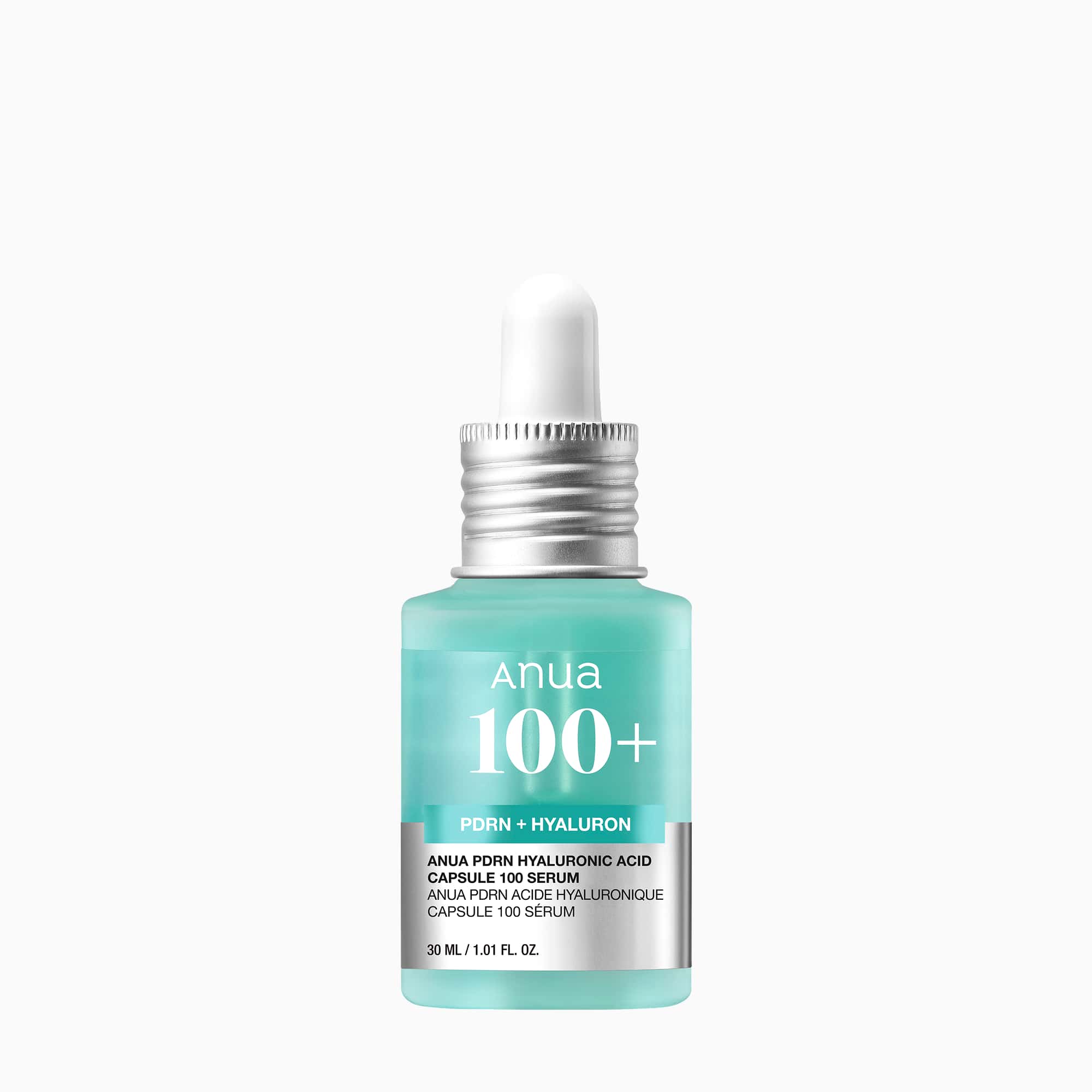
Anua PDRN Hyaluronic Acid Capsule 100 Serum. Photo: Anua
Anua PDRN Hyaluronic Acid Capsule 100 Serum, $28 for 30 ml, about 93 cents a ml. The list opens with water, butylene glycol, propanediol, glycerin and hydrolyzed hyaluronic acid, with niacinamide seventh. Sodium DNA arrives around twentieth, after adenosine and a run of plant extracts. Read honestly, this is a well-built hyaluronic acid serum with some niacinamide and a little PDRN. The “100” on the bottle is part of the name, not a concentration you can find on the list.
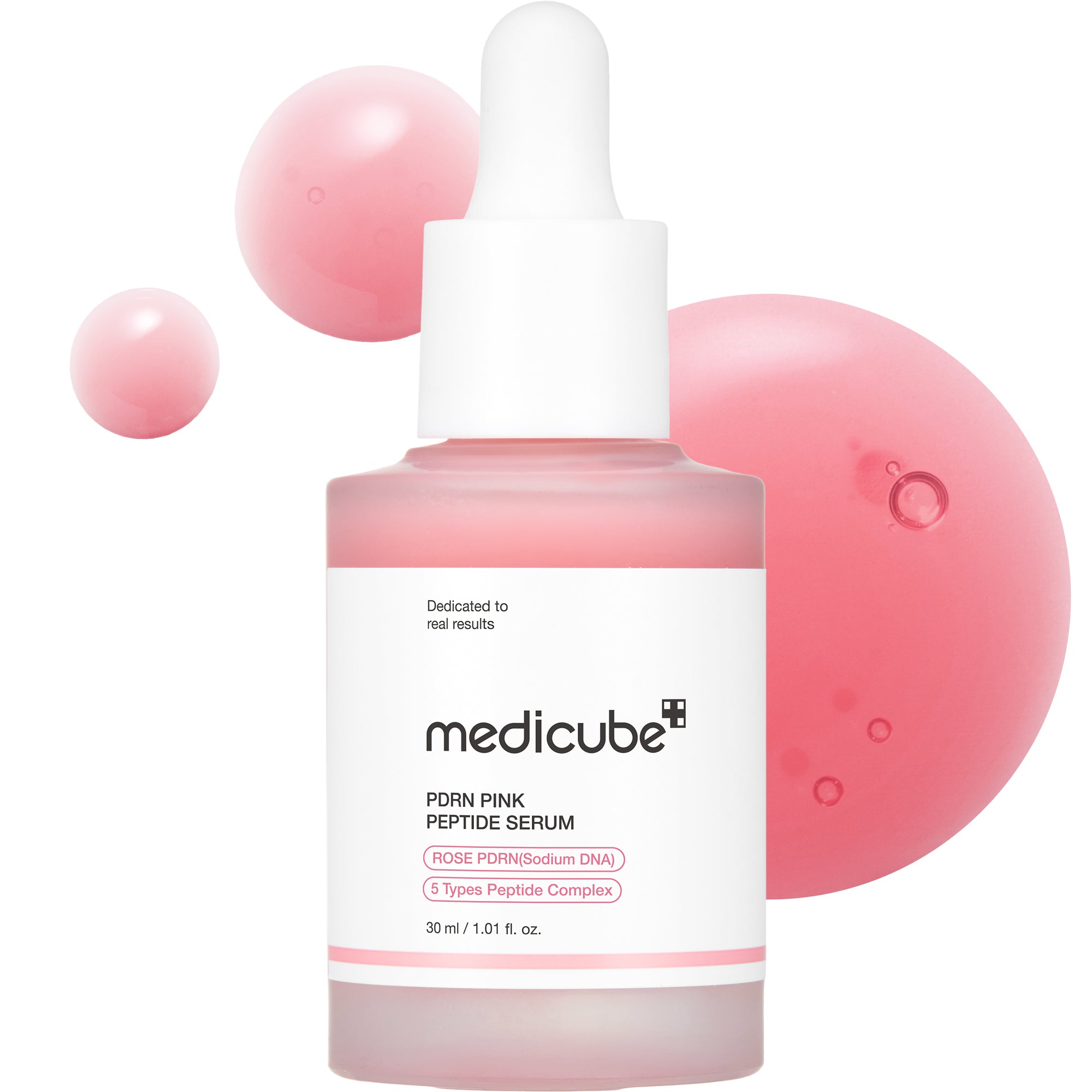
Medicube PDRN Pink Peptide Serum (Rose PDRN version shown). Photo: Medicube
Medicube PDRN Pink Peptide Serum, $24 for 30 ml, 80 cents a ml. Here’s the gossip: the same name covers two lists. In the salmon version, Sodium DNA sits eighth, right after 1,2-hexanediol. In the Rose PDRN version, it drops to near the end, after rose extract. Both contain fragrance, and both list five peptides near the bottom. The brand says the formula carries a Korean dual function claim for fine lines and brightening. That is a real regulatory category with homework attached [6], but the label doesn’t tell you which ingredient carried the review, so don’t assume it was the DNA.
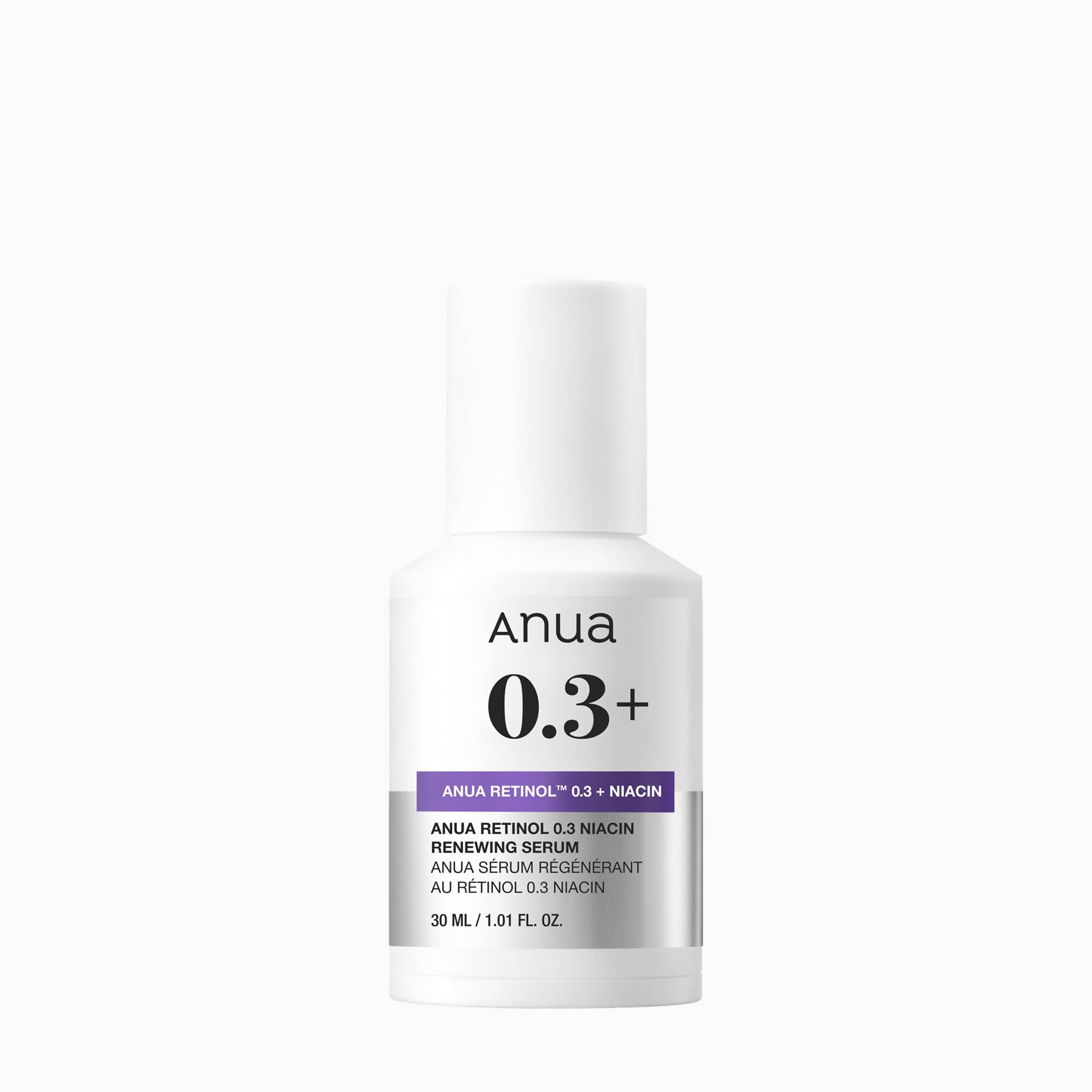
Anua Nano Retinol 0.3% + Niacin Renewing Serum. Photo: Anua
Anua Nano Retinol 0.3% + Niacin Renewing Serum, $25 for 30 ml, about 83 cents a ml. A number on the front, which I always appreciate, though “Nano Retinol” is a trademark, so ask whether 0.3% means the retinol or the branded system around it. Retinol sits mid-list, around eighteenth, with niacinamide third and ceramide NP and panthenol in support. It comes in an opaque pump, which retinol likes, and the brand tells beginners to start two or three nights a week. That is the Korean buffer-and-soothe approach we covered in retinol in K-beauty vs Western formulas.
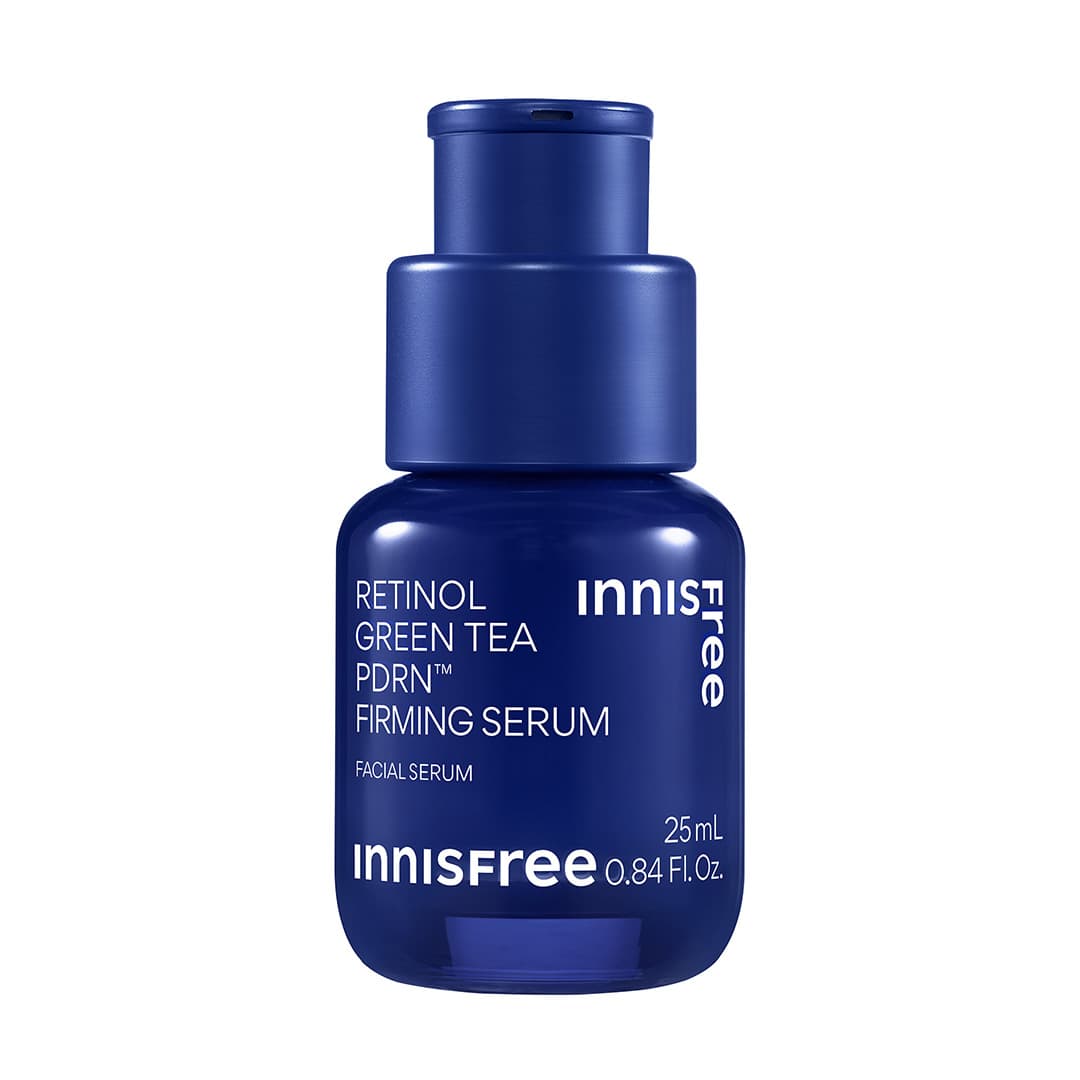
Innisfree Retinol Green Tea PDRN Firming Serum. Photo: Innisfree
Innisfree Retinol Green Tea PDRN Firming Serum, $37 for 25 ml, about $1.48 a ml. The one that sells both. It advertises a 1% Triple Retinol Complex, and the list does carry retinol and hydroxypinacolone retinoate. But the “56% Green Tea PDRN” is, in Innisfree’s own words, a green tea, probiotic-derived lactobacillus ferment lysate. It leads the list. Sodium DNA does not appear on it at all. So this is a retinoid serum built on a ferment, with “PDRN” as a trademark. Nothing wrong with a ferment. Just know the bottle and the salmon trial are not talking about the same ingredient.
Put the four side by side and the pattern is the mascot rotation in miniature: water, a glycol or two, niacinamide, adenosine, hyaluronic acid, and the famous ingredient somewhere further down than the front suggests. The two retinol bottles at least put a number on the front. The PDRN bottles mostly ask for trust.
What to check on the label before you buy
- Find “Sodium DNA” (or PDRN) on the list. If it isn’t there, the “PDRN” is a name for something else. If it is, note its position. After the preservative and the plant extracts usually means a small amount.
- Look for a concentration. The trial used 0.1% of one specific preparation [1]. Almost no serum tells you its PDRN percentage or fragment size, so you can’t match it to that result.
- Check the version. Salmon and plant versions of the same product can have different lists. Read the one you’re buying.
- For retinol, ask what the percentage measures. A branded “complex” may include more than one retinoid, or a delivery system, in the number.
- Check the packaging. Retinol wants an opaque, airtight container. A clear dropper on a sunny shelf is a slow way to waste it.
- Fragrance and essential oils. Note them if your skin is reactive; that applies to both categories.
- Look for the Korean functional-cosmetic wrinkle claim. In Korea, a product that claims to help improve wrinkles is a functional cosmetic that has to be reviewed [6]. “Firming”, “plumping” and “glow” are not. Export labels may drop the marking, so check the brand’s Korean listing if it matters to you.
- Do the cost per ml. A PDRN serum at hyaluronic acid serum prices is a fair deal. A PDRN serum at treatment prices is paying for the salmon story.
Where it fits in a routine
Both sit in the serum step, after cleansing and any watery toner, before moisturizer. Retinol goes at night, and sunscreen the next morning is not optional. If you’re new to retinol, start a few nights a week and build up. On the nights between, a hydrating serum, PDRN or otherwise, has a perfectly respectable job. Using both on the same night isn’t known to cause problems, but add one new product at a time so you know which one your face is reviewing.
If you already have a niacinamide serum and a hyaluronic acid serum, a PDRN serum built on the same base is your third copy of the same layer. See the three-product routine for where the cuts should fall, toner, essence and serum overlap for the layering, and our peptide guide for the last ingredient sold as a retinol alternative. And read the Korean ingredient list before the front of the bottle.
If you want a wrinkle step with a long evidence file, buy a retinol and use it long enough to find out. If you want a pleasant hydrating serum with a promising ingredient, buy the PDRN one at a hydrating serum price. Buy one. Not both, unless you have finished the first.
When to see a clinician first. Talk to a dermatologist or your doctor before starting any retinoid if you are pregnant, planning a pregnancy or breastfeeding. Also check first if you have eczema, rosacea or another inflammatory skin condition, or if you have a fish allergy and are considering a salmon-derived product. Stop a product if redness, burning or peeling persists beyond the first few weeks. Seek urgent care for swelling of the face, lips or eyes.
Frequently asked questions
Is PDRN better than retinol?
Not as a category. One small trial found a specific 0.1% PDRN eye cream improved under-eye measurements about twice as much as a 0.1% retinol eye cream over 28 days. That tested one formula, around the eyes, for four weeks, with company-affiliated authors. It does not show that PDRN serums in general outperform retinol or retinoids.
Does PDRN in a serum work like PDRN injections?
Nobody has shown that. Most PDRN research uses injections or wound-care settings, where the ingredient is placed under the skin barrier. A serum has to get a large DNA molecule through the outer layer of skin first, and how well that happens is still being worked out.
Can I use a PDRN serum and retinol together?
Nothing published says they clash. A common approach is retinol at night and a hydrating serum in the morning or on retinol rest nights. Introduce one new product at a time so you know which one your skin is reacting to.
Is a PDRN serum safe if I'm pregnant?
Ask your clinician before starting any retinoid if you are pregnant, planning to be or breastfeeding. For PDRN serums, there is no specific pregnancy safety data in the trials we found, so the same advice applies: check first.
Sources and further reading
- Ye, Wang, Du, Li and Hu, Topical medium-length PDRN enhances dermal extracellular matrix repair in photodamaged skin via PI3K-Akt/TGF-β-regulated pathways
PLOS One 2026, doi:10.1371/journal.pone.0350905. Includes a randomized, double-blind, split-face study in 31 Chinese women aged 35 to 55 with self-reported sensitive skin: 0.1% PDRN-850K eye cream on one side, an identical-base 0.1% retinol eye cream on the other, twice daily for 28 days. Reports roughly two-fold greater improvement in periocular wrinkles, dermal thickness, density and eye-bag measures with PDRN; both well tolerated. Three of five authors list affiliations with Shanghai biotechnology companies; the PDRN material was supplied by a biotechnology company; authors declared no conflicts and no specific funding.
- Alhussain et al., Polynucleotides and Polydeoxyribonucleotides for Skin Rejuvenation, Postoperative Scar Prevention, and Wound Healing: A Systematic Review of Randomized Clinical Trials
Cureus 2026, doi:10.7759/cureus.112403. Seven randomized trials with 183 participants (four rejuvenation, one scar prevention, two wound healing), including injections, needle-free jet delivery and PN applied after microneedling. Most consistent benefit in wound healing; limited by small samples, heterogeneous protocols and routes, and no standardized PN or PDRN preparation.
- Squadrito et al., Pharmacological Activity and Clinical Use of PDRN
Frontiers in Pharmacology 2017;8:224. Review of PDRN as a registered drug derived from salmon trout or chum salmon sperm DNA, with molecular weights of 50 to 1,500 kDa; its main proposed mechanism (adenosine A2A receptor engagement) appears linked to DNA origin, molecular weight and manufacturing process.
- Kong et al., A comparative study of the effects of retinol and retinoic acid on histological, molecular, and clinical properties of human skin
Journal of Cosmetic Dermatology 2016;15(1):49-57, doi:10.1111/jocd.12193. Four weeks of retinol or retinoic acid both thickened the epidermis and raised collagen gene and protein expression; 12 weeks of a retinol formula significantly reduced facial wrinkles on image analysis.
- Mukherjee et al., Retinoids in the treatment of skin aging: an overview of clinical efficacy and safety
Clinical Interventions in Aging 2006;1(4):327-348, doi:10.2147/ciia.2006.1.4.327. Review of retinoid evidence in skin aging; irritation (burning, scaling, dermatitis) limits acceptance, and retinol and retinaldehyde are considerably less irritating than tretinoin.
- Korea Legislation Research Institute, Cosmetics Act (English translation)
Act No. 20901, amended 1 April 2025. Article 2 defines functional cosmetics, including products that help improve wrinkles.
Sources checked October 24, 2026. This is an editorial summary, not a systematic review or individual advice.